Three Floors, One Material Flow
In Jablonné nad Orlicí in eastern Czechia, family-owned Flexcon produces cable harnesses and electromechanical assemblies for customers across Europe — supplying the electrical engineering, white goods, and textile machinery sectors. As demand grew and product variety expanded, the company’s multi-floor production setup started to show its limits. Decentralised storage, manual picking, and walk time were eating into productivity, increasing physical strain on operators, and leaving room for errors.
Company: Flexcon
Industry: Electromechanical Manufacturing
Location: Jablonné nad Orlicí, Czechia
Local Partner: DREAMland PLC & Robots
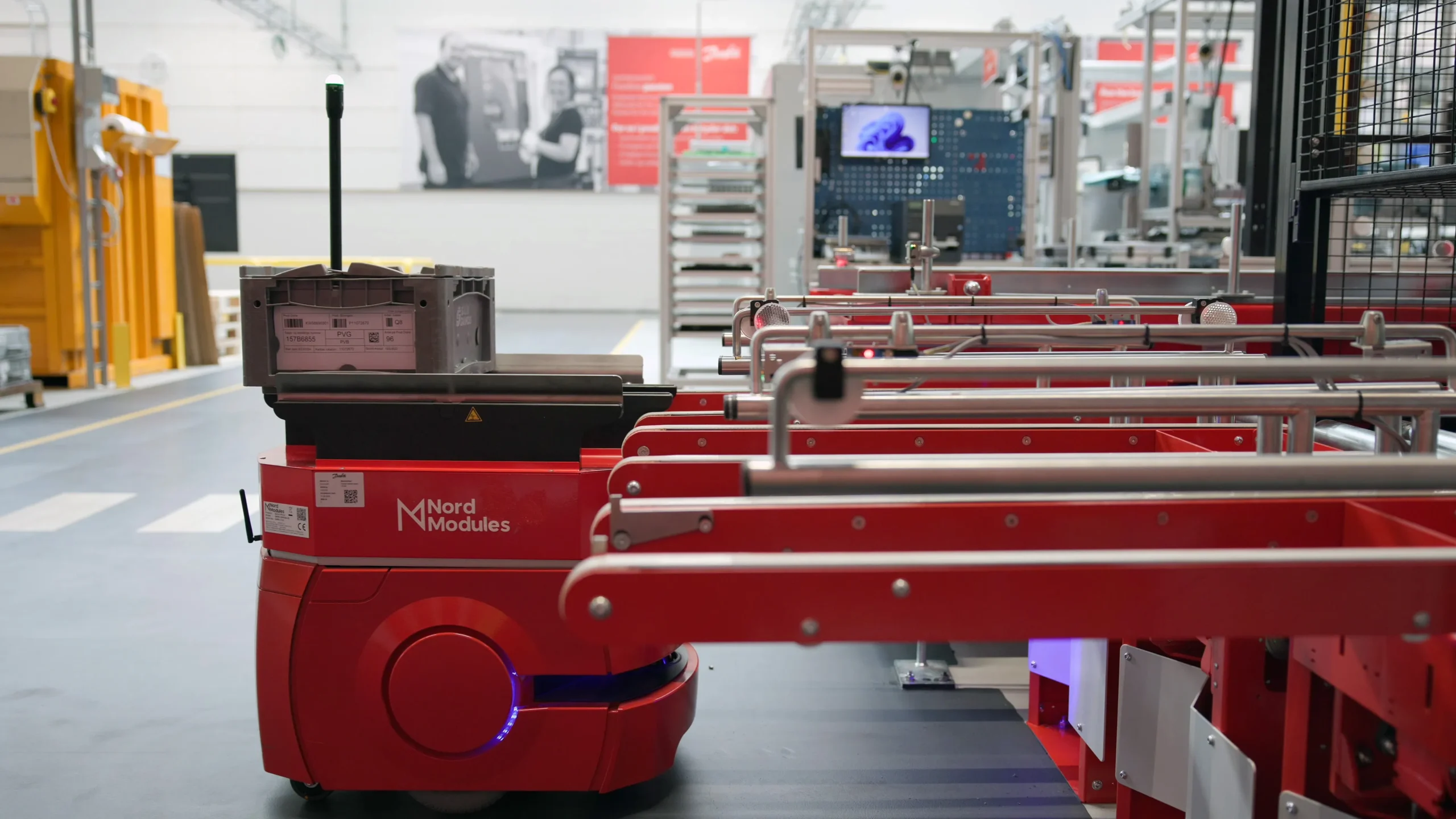
AMR setup: Nord QM220 Quick Mover + Nord SC200-480 Shelf Carrier + MiR250

The brief was clear: rebuild the internal material flow so it could keep up with growth — without simply adding more people.
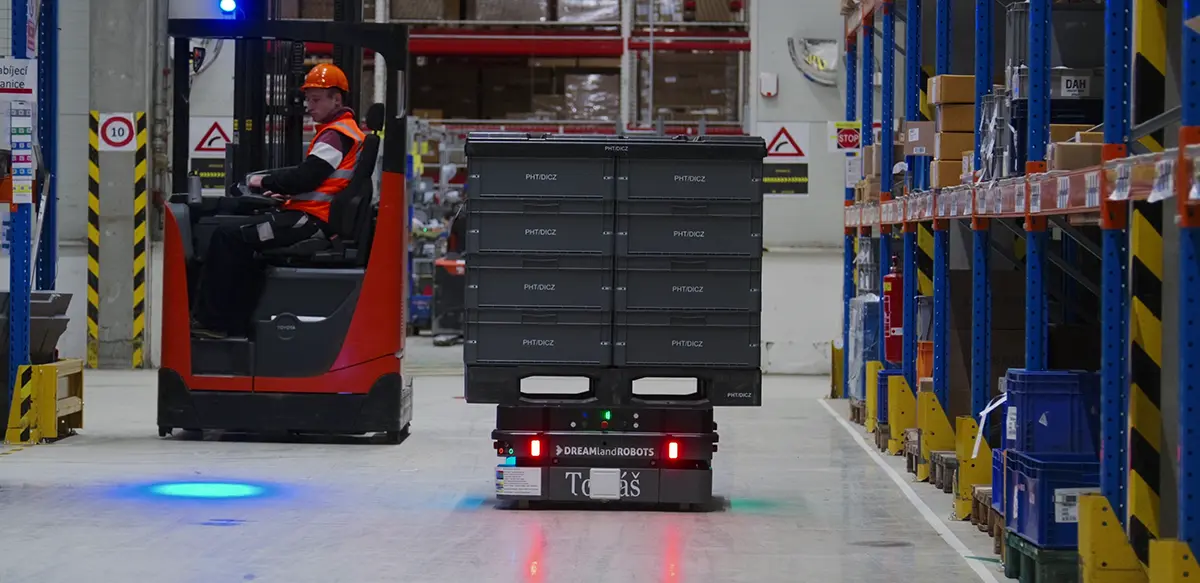
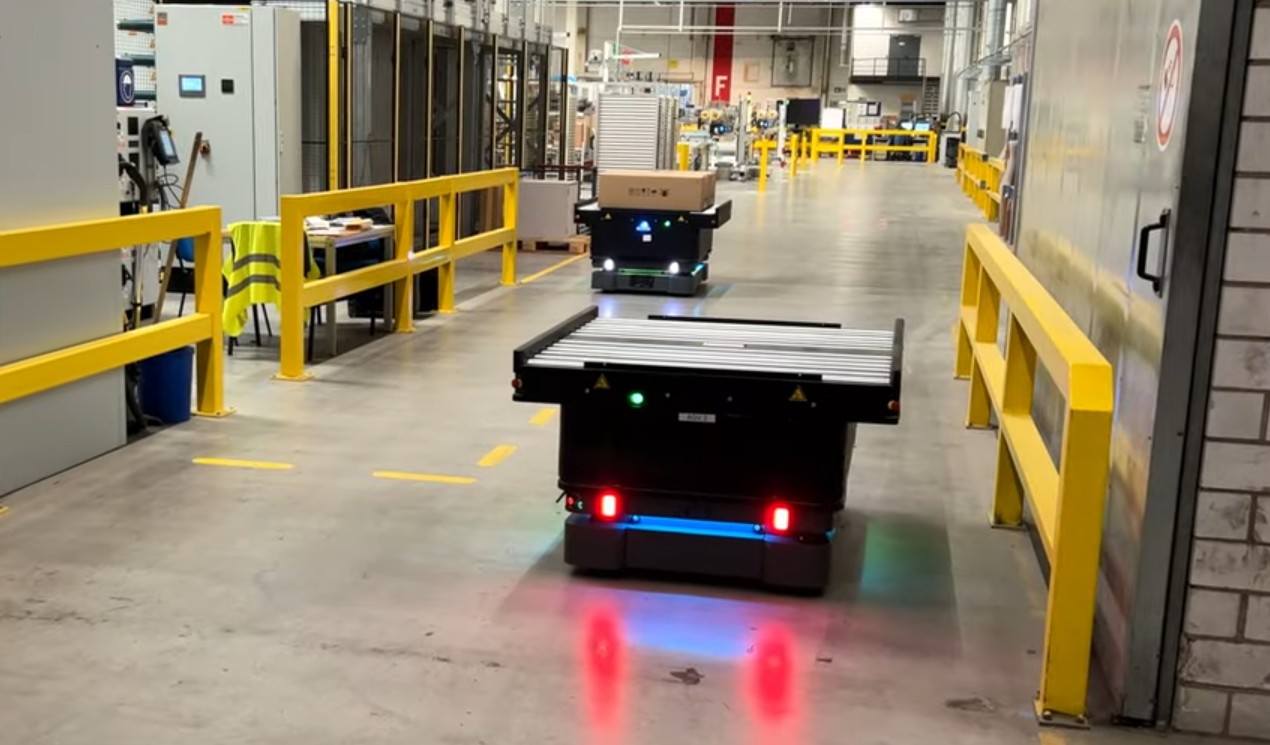
Together with our integration partner DREAMland, Flexcon deployed a fleet of MiR250 autonomous mobile robots, several of them fitted with MiR Go Approved top modules from Nord Modules. The result is an orchestrated, multi-floor material flow where operators and robots work side by side, and the error rate sits below 0.5%.
THE CHALLENGE
A decentralised setup that couldn’t scale
Before automation, material flow at Flexcon was spread across three floors with decentralised storage. Picking was slow, manual touches were high, and every transfer between floors and stations added time, fatigue, and the potential for mistakes. With product variety growing and labour markets tightening across Europe, throwing more headcount at the problem wasn’t a real option.
Flexcon needed a system that could:
- Bring error rates down and free operators from repetitive walking and handling
- Move material reliably across three floors without human intervention
- Handle both lightweight and heavier payloads in the same fleet
- Integrate cleanly with existing ERP and warehouse management software
THE SOLUTION
One top module, two roles — paired with a purpose-built cart
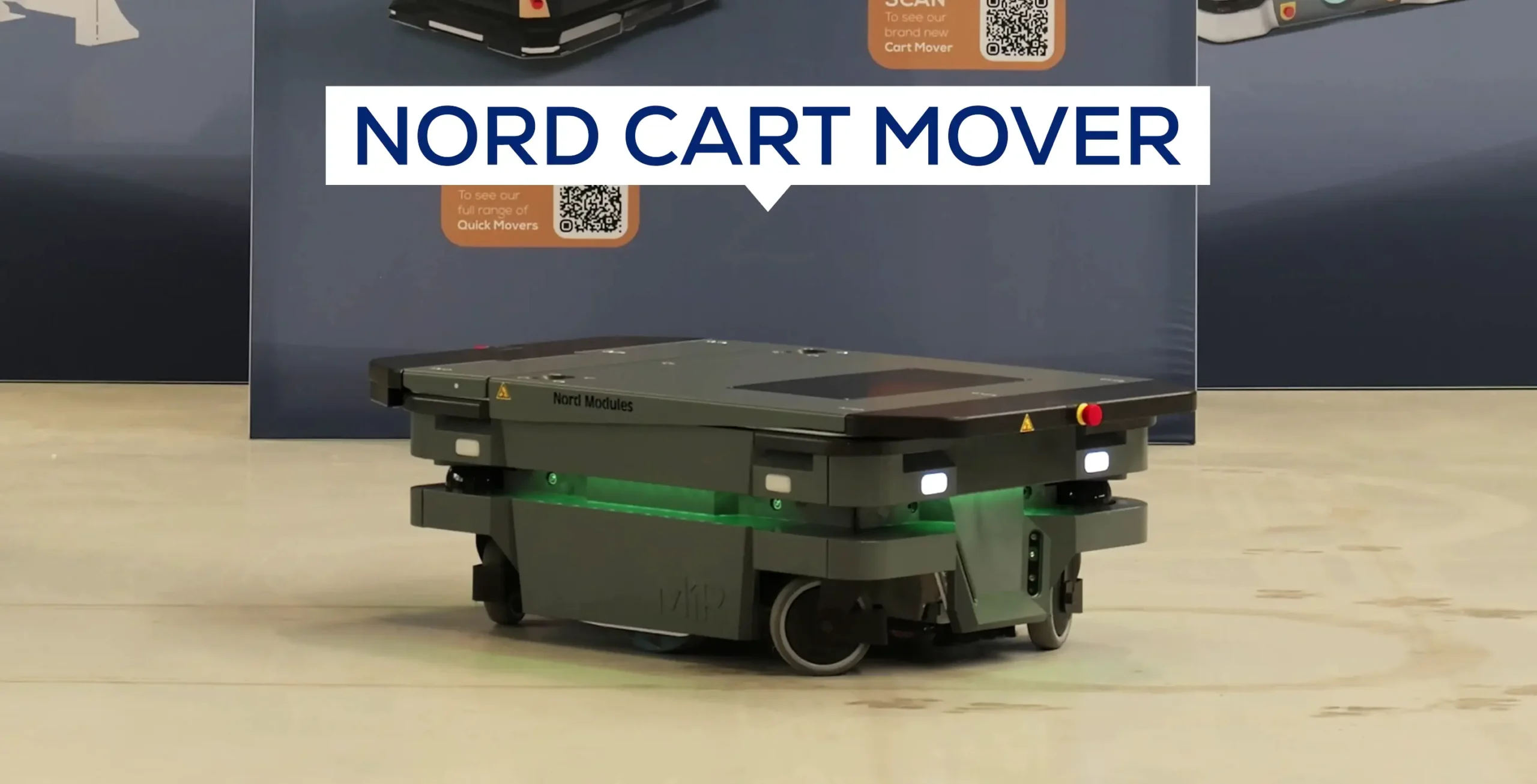
The Nord Modules contribution at Flexcon centres on the QM220 Quick Mover — a MiR Go Approved top module mounted on the MiR250. The Quick Mover is engineered to do two distinct jobs in the same configuration:
- Pick up and deliver goods directly to and from Nord Gates — for fast, repeated transfers where the robot loads and unloads at fixed stations along the production line.
- Pick up and deliver the SC200-480 Shelf Carrier — a dedicated cart designed to work with the Quick Mover, enabling the same robot to move shelved goods and heavier loads without changing top modules or breaking the cycle.
That dual capability matters in a multi-floor setup like Flexcon’s. One top module, one MiR Go Approved configuration, two clearly different transport jobs — fewer SKUs to manage, fewer changeovers, and one consistent integration to validate. MiR Go Approved certification means the Quick Mover is tested, validated, and ready to deploy on MiR250 robots without integration risk — exactly the kind of certainty Flexcon and DREAMland needed when adding automation into a running production environment.

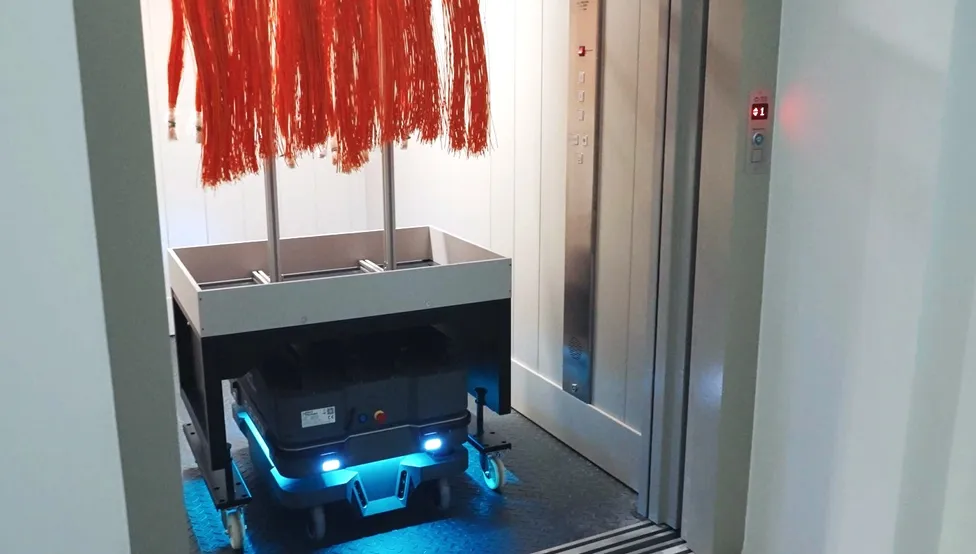
Industrial-grade construction and rigorous testing matter doubly in a multi-floor setup, where the top module and the carts both have to perform consistently shift after shift, day after day, as robots move between elevators and stations.
Alongside the Quick Mover and Shelf Carriers, custom top modules engineered specifically for Flexcon handle hands-free transfers to and from a Modula vertical lift system — five towers, 392 trays, around 1,260 plastic boxes — all tracked via QR codes. Flexcon’s ERP issues commands to a higher-level system that generates missions in MiR Fleet and synchronises them with the Modula WMS.
The robots call the right trays automatically, pick up loads without human intervention, deliver across three floors, and return trays to storage when the job is done.
“This system enables us to manipulate material across three floors without human intervention.”
— Tomáš Sekyra, CEO, Flexcon

What the numbers say
The new setup processes around 1,000 items per shift, with the error rate now below 0.5% thanks to the combination of AMRs, VLMs, Put-to-Light, and ERP-driven mission planning. Walk time and manual touches have been replaced with scanning and supervision. Trays are staged before MiR250s arrive, removing dwell and wait time from the cycle.
The wider effect is that Flexcon’s intralogistics rhythm now matches the pace of its production — and supports the company’s deliveries across European industries that don’t have time for picking errors.
A foundation, not an endpoint
Flexcon is already planning the next layer: an Automated Storage and Retrieval System (ASRS) that will feed driver messages directly into production and coordinate with MiR Fleet, shortening order-to-station latency further.
That’s the test of a good automation foundation. When the first step works, the next step gets easier — and a multi-floor factory that once relied on legs and clipboards becomes a platform that scales.ation.